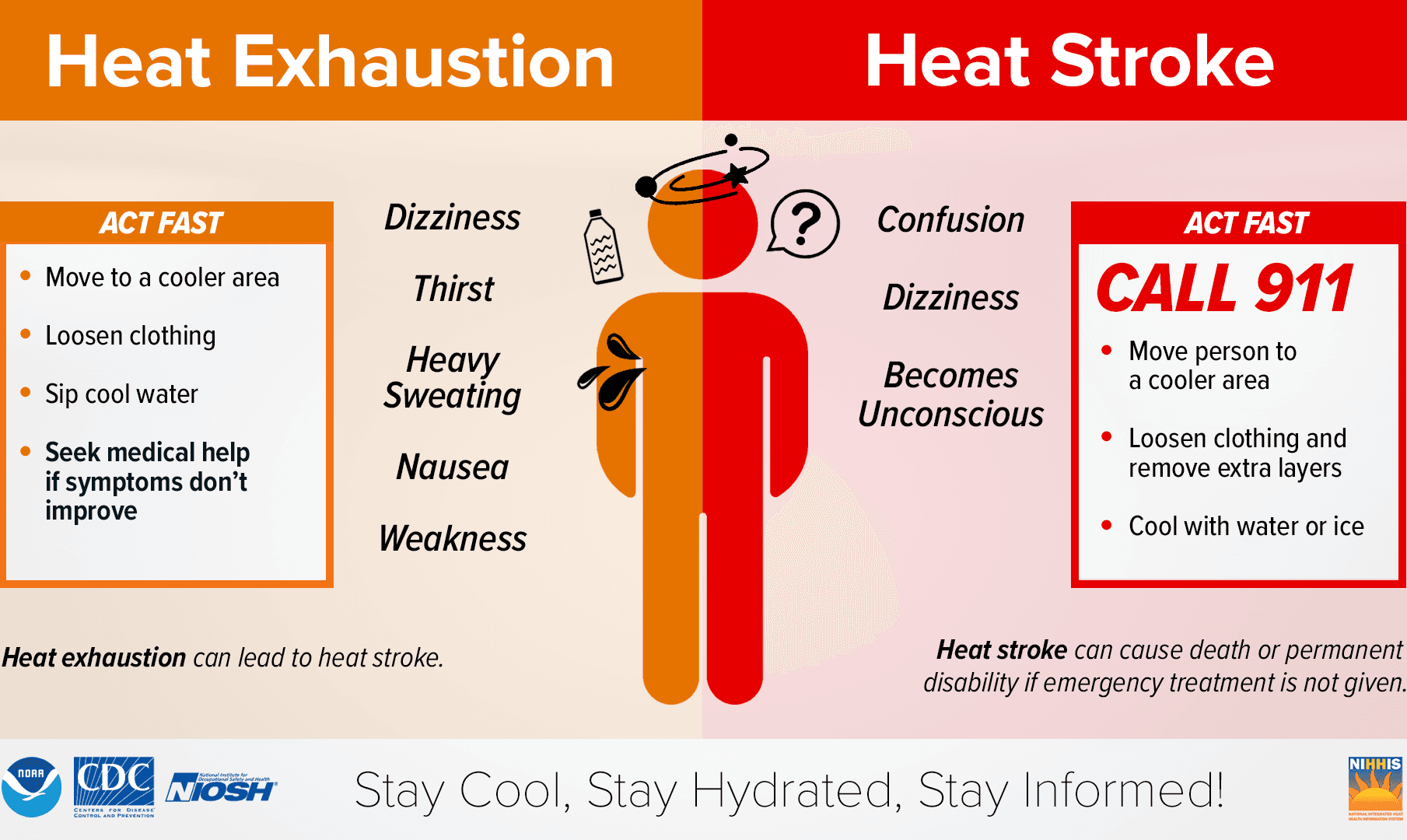
Hot weather can cause heat exhaustion and, more dangerously, heatstroke. Babies, older people and people with long-term health conditions can be at greater risk. Confusion, a seizure or loss of consciousness in the heat is an emergency.
Quick answers
- What is the difference between heat exhaustion and heatstroke?
- Heat exhaustion can cause weakness, dizziness, nausea and heavy sweating. Confusion, seizure or loss of consciousness may signal heatstroke, a medical emergency.
- What should I do for suspected heatstroke?
- Call emergency medical help immediately, move the person somewhere cool and begin cooling them. Do not give fluids if they are confused or unconscious.
- Who is at higher risk in hot weather?
- Babies, older adults and people with long-term health conditions may be more vulnerable and may need help staying cool.
Possible heat exhaustion
Symptoms can include headache, dizziness, nausea, cramps, heavy sweating, thirst, weakness and a raised temperature. Move the person to a cooler place, help them rest and cool their skin. If they are fully alert and able to swallow, offer cool water.
If they do not improve promptly or you are worried, seek medical help.
Heatstroke is an emergency
Confusion, a seizure or loss of consciousness in the heat may signal heatstroke. Get emergency medical help immediately.
- Call local emergency services or go to the nearest emergency department.
- Move the person to a cooler place and start cooling them with cool water, wet cloths or fanning while help is on the way.
- Do not give food or drink if the person is confused, having a seizure or unconscious.
- Stay with them and keep cooling until medical help takes over.
Plan for hot days
- Drink regularly and take breaks in shade or a cool place.
- Wear light, loose clothing where practical and limit strenuous activity in peak heat.
- Check on children, older relatives and neighbours who may need help staying cool.
- Never leave a child or another person in a parked vehicle.
Heat illness can happen indoors and at night
Heat exhaustion and heatstroke can affect people during outdoor work, travel, sport, household tasks or time in a hot room. Humidity, direct sun, limited shade, heavy clothing, dehydration and exertion can all add strain. A room that stays hot after sunset may prevent the body from cooling.
Heat can also worsen existing heart, lung, kidney or diabetes-related problems. Do not assume a person is safe because they are indoors, young, fit or used to warm weather.
People differ in how quickly they become unwell. Infants, older adults, pregnant people, people with chronic conditions, outdoor workers and anyone who cannot move to a cool place may need extra support.
Some medicines can affect sweating, hydration or the body’s response to heat, but patients should never stop a prescribed medicine on their own. Ask a clinician or pharmacist to review an individual plan before a heatwave, especially if fluid intake is medically restricted.
Recognizing heat exhaustion
Heat exhaustion may cause several symptoms. The person may still be alert and able to answer questions. These signs deserve action: move them to a cooler place, stop activity, loosen unnecessary clothing and begin cooling rather than telling them to push through.
If the person is fully awake and can swallow safely, offer cool water in small, regular amounts while cooling them. Do not force fluid if they are vomiting, confused or drowsy.
Arrange medical advice if symptoms are severe, do not improve promptly with cooling and rest, keep returning, or if the person has a high-risk condition. A child, older adult or pregnant person who is worsening should be assessed sooner rather than waiting to see whether the problem passes.
- Headache, dizziness or unusual tiredness
- Nausea, vomiting or muscle cramps
- Weakness, thirst, irritability or a fast pulse
- Heavy sweating or skin that looks pale or clammy (skin changes may be harder to see on darker skin)
Heatstroke is a medical emergency
Heatstroke can involve serious symptoms, and sweating may or may not be present. Confusion, a seizure or collapse in hot conditions needs emergency medical help immediately. Do not wait for a thermometer reading or for the person to ‘sleep it off.’ Heatstroke can become fatal quickly and requires urgent treatment.
While help is on the way, move the person out of the heat if it is safe, remove unnecessary clothing and start cooling with cool water, wet cloths, fanning or another available safe method. Follow instructions from the emergency dispatcher.
Do not give anything to drink to someone who is confused, having a seizure, vomiting or unconscious because they could choke. Stay with them and monitor breathing. If they become unconscious, tell emergency responders and follow their instructions.
- Very high body temperature or hot skin
- Rapid breathing or heartbeat
- Confusion, agitation or poor coordination
- Seizure or loss of consciousness
A simple first-aid sequence
For suspected heat exhaustion, follow these steps and stay with the person. Do not leave someone who is dizzy alone near traffic, stairs, machinery or a vehicle.
If the patient is not clearly improving, is repeatedly vomiting, cannot drink, has severe pain or has any sign of heatstroke, get urgent help. Do not use alcohol rubs or give medication intended to lower fever as a substitute for cooling and emergency treatment.
Do not immerse an unconscious person in a bath. For infants, children, people with disabilities or anyone with complex medical needs, seek professional advice early. Keep the person’s regular medicines and medical history ready for the clinical team.
- Stop the activity and move the person to shade or a cool indoor place.
- Loosen extra layers of clothing.
- Cool the skin with a damp cloth, spray or sponge, and use a fan if available.
- Offer cool fluids only if the person is alert and swallowing normally.
- Watch for improvement; get urgent help if symptoms persist, worsen or suggest heatstroke.
Plan ahead for hot days
Check official weather and heat-health alerts when available. A simple plan can make hot days safer:
People who work outdoors should discuss water, shade, rest breaks, workload and emergency communication with their employer or supervisor. Do not expect a worker to continue heavy exertion after heat symptoms begin.
Travellers should plan for delays, carry drinking water and check that children and older relatives are not left in a hot vehicle. A buddy system helps because a person affected by heat may not notice that they are becoming confused or weak.
- Schedule errands and strenuous tasks for cooler periods.
- Plan shade and rest breaks before anyone feels unwell.
- Keep drinking water accessible and avoid long waits in direct sun.
- Wear light, loose clothing and use shade, a hat or other sun protection.
- Identify a nearby cool place for family members during a heatwave.
Keep the home cooler safely
Use these measures where they are safe and practical. Follow official advice during extreme temperatures, and do not rely on a fan alone if someone is becoming unwell.
Check the temperature in rooms where an infant, older person or person with a chronic illness sleeps. If a home remains dangerously hot, arrange time in a cooler public or community space if one is available and safe to reach.
Do not cover a stroller with thick dry fabric because it can trap heat. Use light, breathable clothing and keep a child out of direct sun during the hottest period. Never leave a person or animal in a parked car, even briefly.
- Block direct sunlight with curtains or shutters when outdoor air is hotter than indoors.
- Ventilate when it is cooler outside, if local conditions and security allow.
- Turn off equipment that adds unnecessary heat.
- Use air conditioning if available and maintain filters and equipment.
- Check rooms where infants, older people or people with chronic illness sleep.
- Never leave a person or animal in a parked car, even briefly.
Hydration when health conditions are involved
Regular access to fluids matters in hot weather, especially with sweating or physical work. However, a universal fluid target is not safe for everyone. People with heart failure, kidney disease, liver disease or a clinician-directed fluid restriction should ask their care team what amount and type of fluid is appropriate.
Some medicines can also affect fluid balance. Do not tell a person with a fluid limit to drink large amounts without professional advice; seek guidance before hot weather when possible.
For a generally healthy person, drink regularly and do not wait until severe thirst during prolonged heat or activity. If there is heavy sweating, vomiting or diarrhoea, ask a clinician or pharmacist whether an oral rehydration solution is appropriate.
Energy drinks, alcohol and very sugary drinks are not substitutes for a sensible hydration plan. Confusion, fainting, persistent vomiting, very little urine or inability to drink are reasons for medical assessment, not simply signs to keep drinking at home.
Children, older adults and people who live alone
Infants and young children depend on adults to notice heat, offer feeds or fluids appropriate for their age and move them to a cooler place. Seek advice if a baby is feeding poorly, has fewer wet nappies, is unusually sleepy or feels very hot.
Do not give an infant extra water unless a health professional advises it. Children playing outdoors may not recognize thirst or fatigue, so schedule breaks and stop activity if they look flushed, weak, dizzy or confused.
Older adults may have a reduced sense of thirst, mobility limitations or medicines that alter heat response. Call or visit a relative or neighbour during a heat alert, check that they have a cool room and drinking plan suited to their health, and make sure they can reach help.
People living alone may need someone else to arrange transport or refill medicines. If a person is confused or difficult to wake, treat that as an emergency rather than assuming it is ordinary tiredness.
Medicines and long-term conditions
Some medicines can affect sweating, blood pressure, alertness, kidney function or how the body holds fluid. This does not mean that people should stop treatment during summer. Ask the prescriber or pharmacist to review medicines before a heatwave and explain whether any precautions are needed.
Keep medicines stored according to their label; heat can damage some products if they are left in a car, near a window or in direct sunlight.
Diabetes can make it harder to manage dehydration and illness, and heat may affect glucose monitoring equipment or insulin storage. Follow the product instructions and your clinician’s sick-day plan, and ask what to do if a meter or medicine has been exposed to high temperatures.
People with heart or kidney conditions should follow their personalized fluid and medicine advice. If heat symptoms occur, tell the clinician about all medicines rather than guessing which one caused the problem.
When to seek medical help
Get emergency help for confusion, seizure, loss of consciousness, severe difficulty breathing, collapse, very hot skin with rapid deterioration or inability to wake. Call local emergency services or go to an emergency department and start cooling while help is arranged.
Do not drive a confused or faint person yourself if emergency transport is available. If the person is alert but has heat exhaustion symptoms that are not improving with cooling and rest, seek urgent medical advice.
After an episode, ask a healthcare professional when it is safe to return to work, exercise or outdoor activity, particularly if the person has a chronic illness or needed emergency treatment. Repeated heat illness deserves a review of medicines, work conditions, hydration and home cooling.
If a person becomes unwell again, do not assume it is simply recurrence of the earlier episode; another illness may be present. Keep the emergency contact plan visible during periods of extreme heat.
A household heat-safety checklist
Before a hot spell, make a plan your household can follow. During the day, watch for changes in behaviour, coordination, sweating, breathing and ability to drink—not just the thermometer; a person may need help before they can clearly say they feel unwell.
- Keep drinking water available and identify a cooler room or nearby cool space.
- Plan how children, older relatives and neighbours will be checked.
- Keep a charged phone and local emergency contacts accessible.
- Review any personal fluid limits, medicine-storage instructions or diabetes sick-day plan with a clinician.
- Arrange shade and rest for outdoor workers, and move strenuous chores to cooler hours.
- Keep clean damp cloths available and make a backup plan for power outages if someone depends on cooling or temperature-sensitive medicine.
Frequently asked questions
Should I give water to someone who may have heatstroke?
Do not give food or drink to someone who is confused, having a seizure or unconscious. Call emergency services, move them to a cooler place and begin cooling while help is on the way.
What can I do for heat exhaustion?
Move the person to a cool place, help them rest and cool their skin. Offer cool water only if they are fully alert and able to swallow. Seek medical help if they do not improve promptly or you are concerned.
Can heat illness happen indoors?
Yes. A hot room, poor ventilation, exertion or an indoor space that stays hot overnight can contribute to heat illness. Check on people who may have trouble moving to a cooler place.
Can medicines increase heat-related risk?
Some medicines can affect sweating or fluid balance. Do not stop a prescribed medicine yourself; ask a clinician or pharmacist to review your personal heat-safety plan, especially before a heatwave.
Sources and further reading
Have a question about which service to choose?
Request an appointment